HTML Videos, what are they, and how do you use them? It’s not a secret that videos are a powerful way to engage website visitors and draw them into your content. Whether it’s a piece of featured content meant to educate or a full-screen background meant to decorate, videos are one of the best ways to elevate a website.
People who use smoking products have options. The easiest is to grab what they need at a big box or convenience store. A fast-growing trend is another option – the specialty smoke shop. There are numerous business opportunities in this niche market. If you’re interested in learning how to open a smoke shop, read on for a guide.
Understanding the Basics of the Tobacco Industry
There is a growing market for specialty smoke shops, especially as consumer preferences shift toward specialized, high-quality products. Boutique-style shops often offer curated selections and specialized expertise that chain or big-box stores don’t provide. As cannabis legalization spreads in various jurisdictions and vaping gains popularity, the specialty market is expected to grow even more.
What is a Smoke Shop?
Specialty smoke shops differentiate themselves through a curated inventory, expert staff, and an emphasis on customer experience. They might offer rare cigars, artisan pipes, specialized vaping equipment, or high-end accessories that are not typically found in convenience stores.
The staff are often more knowledgeable and can provide personalized recommendations. The store design and ambience also contribute to a more specialized shopping experience.
Why Specialty Smoke Shops Are Gaining Popularity
In addition to offering specialty products, the smoke shop business is known for its highly-trained staff. Staff members are knowledgeable and can provide personalized recommendations.
The store design and ambiance also contribute to a more specialized shopping experience.
Steps to Open Your Own Smoke Shop
If you’re interested in learning how to start a business in this evolving industry, here are some essential steps to follow.
Evaluating the Market: Urban vs. Suburban
Smoke shops can succeed in both urban and suburban settings, but they often thrive in urban environments with higher foot traffic and a diverse customer base. That said, the growing popularity of specialty products has made suburban locations increasingly viable, especially if there is a lack of competition.
Drafting a Business Plan
A basic business plan should describe the business structure and purpose. Common business structures include Limited Liability Corporations (LLC), partnerships, and corporations.
It should include the business name and location and a carefully-crafted mission statement.
Plans for expansion and growth involving client demographics and marketing strategies should also be included.
Selecting a Suitable Location for Your Smoke Shop Business
Proximity to businesses like liquor stores, bars, tattoo parlors, or even certain types of restaurants can attract a customer base likely to be interested in smoke shop products. This kind of synergy can be valuable for increasing foot traffic and potential cross-promotions.
Procurement of Licenses and Permits to Legally Sell Tobacco Products
This varies by jurisdiction but typically includes a general business license and a specialized retail tobacco license. You may also need permits to display signage and adhere to zoning laws that may restrict tobacco selling near schools or parks. Investing in small business insurance can also be beneficial.
Establishing Relationships with Suppliers
The best way to build a good supplier relationship is to pay for inventory up-front or promptly. Reliable tobacco and accessory suppliers connect with customers they can count on for regular orders and payments.
Not Just a Cigarette Shop: Incorporating E-Cigarettes and Vaping Products
Again, this varies by location, but many places require a separate license to sell e-cigarettes and vaping products. Always check local and state regulations. Age verification systems may also be a requirement.
Designing the Tobacco Store Interior for Maximum Appeal
The layout of the tobacco store interior is important and should cater to casual customers and serious tobacco aficionados.
Open Floor Plan: Opt for an open layout that’s easy to navigate. This allows customers to explore without feeling cramped or overwhelmed.
Zoning: Designate specific zones for different product categories like cigars, pipes, vaping supplies, and accessories. This helps customers find what they’re looking for more easily.
Pricing Strategy for Tobacco Products
Key factors include cost of goods sold, overhead expenses, competitor pricing, and desired profit margin. Additionally, boutique shops often have room for higher markups due to the specialized nature of the products and the customer experience provided.
Implementing a Customer Loyalty Program
A well-designed customer loyalty program can significantly contribute to retaining customers and boosting sales. Here are some ideas tailored to a specialty smoke shop:
Points-Based System
Spend-to-Earn: Customers earn points for every dollar spent, which can be redeemed for discounts or free products.
Tiered Rewards: Offer different levels (Silver, Gold, Platinum, etc.), where higher tiers get better benefits, encouraging customers to spend more to reach the next level.
Stamp Cards
Digital Stamps: Use an app to offer digital stamps for every purchase; a full card earns a free item or discount.
Product-Specific Stamps: Create a separate stamp card for different categories like cigars, pipes, and vaping products.
Birthday Rewards
Offer special discounts or a free small item to customers on their birthday. This adds a personal touch and encourages a visit to the store.
Referral Program
Offer points or discounts to customers who refer new clients. The new customer could also get a discount on their first purchase.
Exclusive Events and Early Access
Members-Only Hours: Reserve specific times for loyalty program members to shop special sales.
Early Access: Let members get first dibs on new products or limited-time promotions.
Educational Rewards
Workshops and Seminars: Offer free or discounted entry to educational events on topics like cigar pairing, e-liquid flavors, or pipe maintenance.
Expert Consultations: Allow customers to redeem points for one-on-one consultations to learn more about products, best practices, etc.
Personalized Offers
Product Preferences: Use customer data to offer targeted promotions based on previous purchases.
Anniversary Specials: Reward customers on the anniversary of joining the loyalty program or making their first purchase.
App-based Programs
Mobile App: Use an app to track customers’ points, see new products, and receive targeted notifications.
Check-in Rewards: Use geo-fencing technology to reward customers with points every time they check in to your store via the app.
Social Media Engagement
Share and Earn: Encourage customers to share their purchases or experiences on social media in exchange for extra points.
Review Rewards: Offer points for writing reviews of products they’ve purchased.
Miscellaneous
Spin the Wheel: Every time a customer hits a point milestone, let them spin a physical or digital wheel for a chance at various prizes.
Double Point Days: Randomly offer double points on purchases to incentivize more frequent visits.
Hiring and Training Staff for Your New Tobacco Shop
A highly-trained staff is extremely important. Staff members are what set a specialty shop apart from a general store.
They listen to customers and respond knowledgeably. They are courteous and helpful.
At the same time, they are vigilant about maintaining the shop’s security and safety.
Safety and Security Measures
Certainly, while many safety and security measures will be common to retail establishments in general, some concerns are more specific to smoke shops due to the nature of the products sold, the regulations involved, and the customer demographic. Here are some safety and security measures unique to or particularly relevant for smoke shops:
Product Security
Age Verification Systems: Due to the sale of age-restricted items like tobacco and e-cigarettes, an advanced age verification system should be in place to prevent illegal sales to minors.
Locked Display Cases: Expensive or high-theft items like premium cigars, vaping mods, or glass pipes may be stored in locked cases that only staff can open.
Regulatory Compliance
Visible Warning Labels: Make sure that all necessary warning labels and signage regarding tobacco and vaping products are clearly displayed to avoid any legal complications.
Restricted Access: Certain areas of the store where more potent products or paraphernalia are kept might be restricted to customers of a certain age, even if the rest of the store is accessible to younger individuals.
Inventory Management
High-Security Storage: More expensive or regulated items may require a safe or a secure, monitored back room.
Digital Tracking: Given the nature and cost of the products, advanced inventory tracking systems can be useful for monitoring stock levels and detecting theft.
Surveillance
High-Resolution Cameras: Security cameras should be strategically placed not just at entry and exit points, but also around high-value product areas.
ID Scanners: These can be used to scan IDs for age verification and to log details of individuals purchasing age-restricted products.
Staff Training
Handling Intoxicated Customers: Staff should be trained to handle situations where customers might be intoxicated or otherwise impaired, which is a more likely scenario in a smoke shop than in many other types of retail establishments.
Emergency Response: Training on how to handle emergencies such as fires can be crucial given that the merchandise can be highly flammable.
Access Control
Limited Entry After Hours: Some smoke shops limit the number of customers who can enter the store during late hours. Entry may be controlled through a buzz-in system.
Community Safety
Communication with Local Law Enforcement: Maintaining open lines of communication with local law enforcement agencies can help ensure that your business stays up-to-date with local laws and can also help provide a quicker response in case of emergencies.
Cash Handling
Frequent Deposits: Given that some products can be expensive and that smoke shops can sometimes be targets for theft, frequent cash drops and a time-locked safe can add an extra layer of security.
Online Sales Security
Age Verification Software: If the shop also sells products online, robust age verification tools should be implemented to ensure compliance with laws regarding online sales of restricted items.
By incorporating these safety and security measures, smoke shop owners can mitigate risks, ensure compliance with laws, and offer a safe shopping environment for their customers.
How Much Does it Cost to Open a Smoke Shop?
Startup costs can vary significantly based on size, location, and inventory, but generally, expect to invest anywhere from $30,000 to $100,000. This would include rent, initial inventory, licensing fees, and marketing costs.
Navigating the Legal Landscape of Selling Tobacco Products
Trade associations, online communities, and local chambers of commerce can be valuable resources. Websites that specialize in legal news or specific publications for the tobacco and vaping industries can also keep you updated.
Effective Marketing for Your Smoke Shop
If you’re wondering, “what is marketing for a smoke shop?” here are some tactics to consider:
Social Media Presence: Establish a strong social media presence to connect with your customers and keep them updated on new products, promotions, and events. Platforms like Instagram are great for showcasing visual content, such as new inventory or behind-the-scenes looks at your shop.
Influencer Partnerships: Collaborate with social media influencers or bloggers who align with your brand. They can review your products or visit your store, offering you access to a broader audience.
Loyalty Programs: Reward repeat customers with a loyalty program. This could be a point-based system that offers discounts, free products, or special members-only promotions.
Email Marketing: Keep customers engaged with a regular newsletter that offers special promotions, news, and expert tips on your products.
Community Events: Hosting workshops, seminars, or other in-store events can draw people into your store. This could be anything from “how-to” sessions on rolling the perfect cigar to informational sessions on the latest vaping technology.
SEO and Content Marketing: Create informative and engaging content related to smoking and vaping, which can help your website rank higher in search engine results. This will attract more organic traffic and establish your shop as an industry authority. Follow this website startup guide to ensure your site includes all the necessary elements.
Strategy
Pros
Cons
Social Media Presence
– Direct connection with customers. – Visual platform for showcasing products. – Real-time updates.
– Requires consistent posting and engagement. – Platform algorithm changes can affect visibility.
Influencer Partnerships
– Access to a wider audience. – Authentic testimonials and reviews. – Increases brand credibility.
– Potential high costs. – Dependency on influencer’s reputation. – Return on investment can vary.
– Initial setup costs. – Requires management and tracking. – Overuse can diminish perceived value.
Email Marketing
– Personalized customer interaction. – Direct channel for promotions. – High ROI potential.
– Risk of being marked as spam. – Needs consistent content creation. – Managing unsubscribes.
Community Events
– In-person customer engagement. – Demonstrates expertise. – Draws local foot traffic.
– Requires planning and resources. – Limited to local audience. – Dependent on event success.
SEO & Content Marketing
– Increases organic web traffic. – Establishes authority in the field. – Long-term visibility benefits.
– Time-consuming. – Requires expertise or hiring specialists. – Results may take time to manifest.
Building a Loyal Clientele for Your Tobacco Shop
Although your inventory is the most important aspect of your tobacco shop, the people you hire to sell tobacco products are very important. On of the biggest things that separates a tobacco shop from a convenience store or big box store is the approachability and knowledge of the staff.
As part of your marketing plan, reach out to customers and seek feedback. Also, develop customer loyalty programs.
Inside Tips for a Successful Business
Customer Experience: Train your staff to be knowledgeable and approachable. A friendly, educated staff can greatly improve customer satisfaction and repeat business.
Inventory Management: Make sure you are stocked with a variety of products to appeal to different tastes and preferences. Use data analytics to track bestsellers and trends.
Legal Compliance: Always stay updated on local, state, and federal laws concerning the sale of tobacco, cigars, and vaping products. Non-compliance can lead to hefty fines or even closure.
Quality Over Quantity: When it comes to specialty shops, less can often be more. Curate your selection carefully to include high-quality, unique products that can’t be found just anywhere.
Local Partnerships: Build relationships with local businesses to support each other through cross-promotions or bundled offers.
Transparency: Be transparent about the origins of your products, especially if you’re selling items like artisanal cigars or high-end vaping liquids. Ethical and transparent business practices can win you long-term customers.
Branding: Invest in strong branding elements like a memorable logo, store design, and even custom packaging to make a lasting impression.
Seasonal Promotions: Align some of your marketing efforts and promotions with holidays, seasons, or local events to boost sales during potentially slow periods.
Feedback Loop: Actively seek and more importantly, act on customer feedback to continually improve your business.
FAQ: How to Start a Smoke Shop
Is a Tobacco Shop a Profitable Business?
If managed well, a specialty smoke shop can be a profitable venture. The industry is relatively recession-proof, and specialty shops can command higher prices. However, the regulatory landscape and shifting consumer habits are variables that can impact profitability.
Do tobacco shops all sell the same range of tobacco products?
No. The most successful shops carry the range of products that best match their customer demographics. Also, a specialty tobacco shop often starts with a minimal inventory and grows inventory in response to customer requests.
Is a business plan essential to start a smoke shop?
Yes, a business plan is essential for all businesses, including a smoke shop. A business plan is especially important when it comes to seeking financing to grow. Lenders want to see all the financial information, and also want to see a professional business plan. It can also serve as a business startup checklist to keep you on track as you start and grow your business.
How have tobacco sales evolved with the rise of e-cigarettes and vaping products?
Both e-cigarettes and vaping products have become wildly popular, with an ever-growing array of possible selections. Although relatively new, those products are commanding a big chunk of inventory and contributing to overall tobacco sales. However, public perception and concerns about safety have caused challenges to the popularlity.
The popularity of vaping products has seen significant growth since their introduction in the early 2000s. Several factors have contributed to the rise in vaping’s popularity:
Youth Appeal and Marketing
Design and Branding: Sleek designs and youth-oriented branding have attracted a younger demographic.
Flavor Options: The availability of various flavors—ranging from fruits to desserts—has also contributed to its appeal.
Perceived Safety
Harm Reduction: Vaping is often marketed as a safer alternative to traditional tobacco smoking, although the long-term health effects are still the subject of ongoing study and debate.
Convenience
Ease of Use: Vaping devices are generally easy to use, requiring little more than a charged battery and liquid or pod.
Portability: The small and portable nature of many vaping devices has also contributed to its popularity.
Cultural Factors
Social Media: Vaping has gained a significant cultural footprint through social media, with influencers and ordinary users sharing content related to vaping.
Community: Online forums, social media groups, and even local meet-ups contribute to a sense of community among vapers.
Regulatory Landscape
Regulation Lag: Initially, the lack of strict regulations allowed the vaping industry to grow rapidly, though this has been changing with more scrutiny and legislation.
However, the vaping industry has also faced significant challenges:
Health Concerns: Cases of lung injuries associated with vaping have led to public health investigations and concerns.
Regulations: Increasingly stringent regulations, especially aimed at reducing youth vaping, have impacted the industry. These regulations can vary significantly by region.
Taxation: Some jurisdictions have introduced special taxes on vaping products, which could potentially affect their popularity.
Due to the dynamic nature of the industry and changing public opinion, the growth trends can shift. It’s important for anyone interested in the vaping business to stay updated on the latest research, public sentiment, and regulations.
Most small businesses recognize that having a website is important since the website serves as both a credibility check for potential customers and a way to share information regarding the company’s products and services offerings.
However, a distinct difference exists between having a website that simply contains information about your company, versus a website that performs specified business functions. It is important to recognize that having a functional website can be extremely beneficial for your business – whether it be time/cost savings, efficiency, or lead generation.
In this article, we are going to look at a few examples of informational versus functional websites. I encourage you to review your current website with fresh eyes and ask yourself whether your site falls into the informational or functional category. Before you start your self-evaluation, you must better understand each type of website.
What Is an Informational Website?
An informational website simply provides basic information about the company including details regarding product and services offerings, as well as contact information.
You likely have seen many informational websites as they are the most common format for small business websites. Informational websites often have 1-8 pages of content that contain text and images about the company, a brief listing of the core product or service offerings, and detailed contact information. Many informational websites will have a simple call-to-action for the customer to contact the company for more info or to schedule a meeting.
What Is a Functional Website?
A functional website performs specific business functions on behalf of the company to streamline operations and save time or resources.
These functions could include lead generation, customer support, e-commerce, appointment scheduling, online bill payment, onboarding, and more! Keep in mind that a functional website can act as an “employee” who never eats, sleeps, needs rest breaks, or requests a raise! As a result, the more tasks you can have your website “perform” for you, the higher number of benefits will be yielded.
Technically, any website can be a functional website if built correctly with features that drive value for the business.
Examples of Functional Websites
The following are just a few examples of functional websites in action. In full disclosure, our web designers built most of these websites for our clients. We hope you can use these examples to get your gears turning regarding how your web presence can move from purely informational to functional.
Lead Generation and Appointment Scheduling
Perhaps one of the most basic functions that your website could and should absolutely do is generate leads. Keep in mind though, simply having your contact information displayed is not enough to move you from the informational stage to the functional stage.
As an example, NextGen Wealth uses their website to generate leads for their business. Beyond their service information, they have a tremendous blog that shares in-depth perspectives on various financial topics. Additionally, as the lead generation portion, they offer a Free Retirement CheckupTM which allows any visitor to schedule a complimentary retirement checkup with a certified financial planner directly from the website.
You can use a tool like Zoho Bookings to embed an automated scheduling calendar into your website that directly connects with your teams’ Google or Outlook calendars.
New Customer Onboarding
ICT Muscle & Joint Clinic uses their website to inform customers about their health services, as well as allow customers to directly schedule, reschedule, and manage their appointments conveniently from their website. This process also includes collecting the necessary new patient forms and verifications online to save their patients and team time within the clinic.
They also have a consolidated recommended Products page where they can refer existing patients to recommended health products which they may mention during an appointment.
Selling Products and Services Online Through E-commerce
We are used to seeing some websites sell standard products to the public. However, that same concept can be applied to small businesses as well.
For example, typically artists will only sell their products in-person at their gallery or pop-up community events. They could also sell their products on a third-party marketplace like Etsy or Amazon if they can establish that relationship. However, our example artist, Firefly Art, doesn’t have a traditional art gallery. Instead, they sell their affordable paintings and drawings directly from their e-commerce website and have made sales to customers from coast-to-coast.
Similarly, business-to-business (B2B) companies can also use e-commerce to sell products to other businesses. For example, Critter Guard uses their e-commerce driven website to sell products to their primary audience of power utility companies (wholesale), as well as their secondary audiences of pest control companies and even homeowners (retail). All of which is done directly from their website. Impressively, they have sold their product to customers in over 30 countries!
On a related note, we build all our clients’ e-commerce websites on the powerful e-commerce platform, Shopify, due to its combination of affordability and features.
Customer Support and Online Demos
Side by Side IT, a local IT support company, allows its customers to submit support requests online 24/7/365 directly from their website and associated support portal. This gives customers peace of mind when a computer issue arises.
Collision Resources has a live chat built-in to their website, powered by Zoho SalesIQ, that allows them to chat directly with their visitors on their website. Additionally, they have an online scheduling tool that allows potential customers to schedule a personalized demo of their body shop scheduling software.
Online Payment Collection
Almost all companies struggle with collecting payments from their customers at some point. However, just because you don’t sell products online, doesn’t mean you cannot collect payments online. For example, this local law firm allows their customers to conveniently pay their invoices and retainers online.
If you’re already using a bookkeeping software like QuickBooks or Freshbooks, you likely can integrate online payments very easily!
Advanced Listings and Showcases
Additionally, you can list far more information on your website than just the core details of your products and services. Having more robust details will cut down on the number of repetitive inquiries that your team has to manually handle, saving your team precious time.
For example, Matrix Group showcases all the commercial properties they have available for lease along with the details, floor plans, and photos of the spaces and associated prices.
P1 Service showcases various projects they’ve completed, sorted by industry, to help customers understand the scope of who they are equipped to serve, as well as the depth of their capabilities.
Online Calculators and Quote Tools
Getting a bit more industry specific, you can offer online calculators and quote tools to build out the necessary information for your visitor to better understand the options available to them.
For example, KC Spray Foam & Coatings, LLC has online calculators that allow their customers to get an estimate on pole barn insulation or the potential savings yielded from using spray foam insulation.
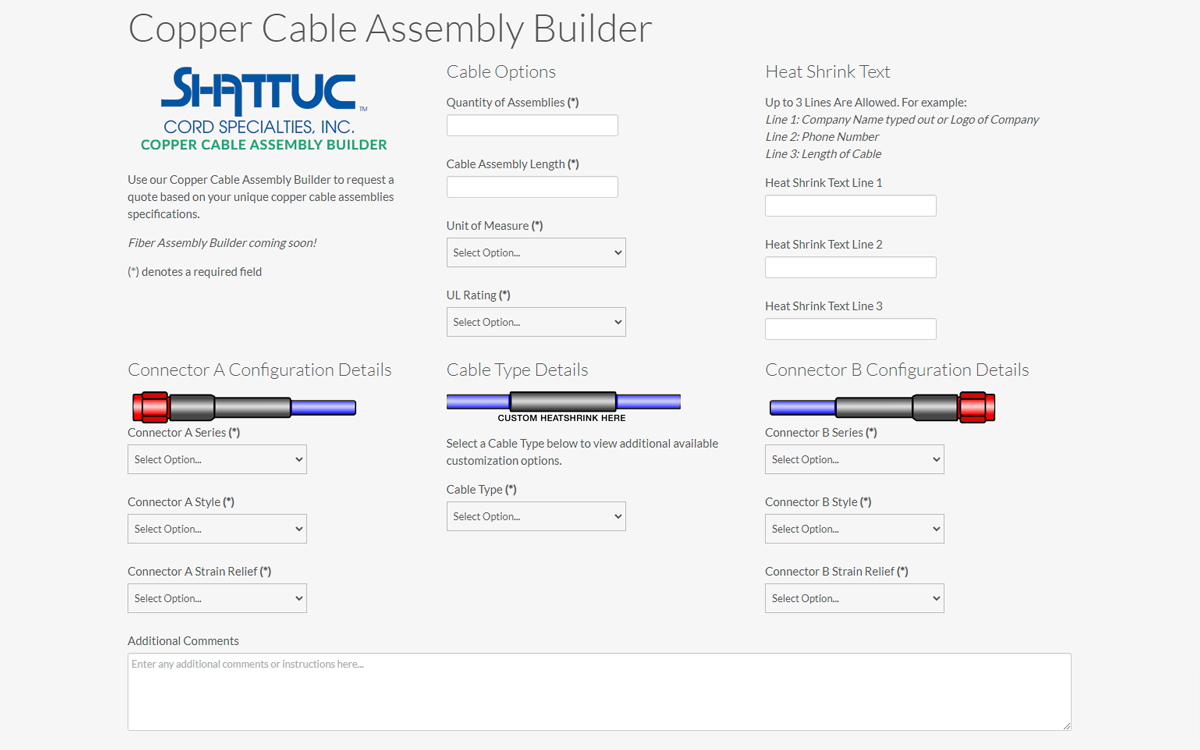
Similarly, Shattuc Cord Specialties allows you to build out your own custom cables directly from their copper cable assembly builder. This drastically streamlines the custom quoting process.
Recruiting
Last but not least, we know many small businesses have trouble recruiting top talent. Your website can help with this process too! Don’t simply list that you are hiring and tell the visitor to contact you if they are interested.
Instead, consider adding a robust careers page where someone can see the available jobs, potential pay rates, benefits, and apply online. Major Painting does a great job of this by leveraging a Careers page to find qualified painters and carpenters. This can often be built directly into your website or leverage a third-party system. For example, P1 Service’s career page links to a third-party platform where you can view every single job opening and apply online.
Considerations for Building a Functional Website
Now that you’ve seen examples of both informational and functional websites, you may be able to create new ideas for how your website could become more functional. The following are a few questions you should ask yourself and your team:
What are the goals of our website? E.g. Generate leads, automate support functions, streamline scheduling, etc.
What could the website do to simplify or automate our business? Don’t limit yourselves to what you think a website can do. Just think about what would be nice if the website could do it for us. Then talk to a qualified web developer to see how that wish could become a reality.
Who will be using our website and what are their typical needs when visiting the site?
Are my website’s current features easy-to-use or do they need to be improved?
What are repetitive tasks or questions that my customer support and sales teams address on a weekly basis?
Those questions can serve as a starting point for transforming your informational website into a functional website.
Need Professional Web Design Help?
If you are interested in learning more about how your website can serve as a tool for your business but aren’t sure where to start, contact our team of web developers. We would be happy to brainstorm ideas with you on how your website could transform from an informational site to a fully functional resource for your business.
Even if we can’t help you directly, we will still point you in the right direction to either a vendor or toolset that can help.
Additionally, if you want more tips like these delivered to your inbox, consider signing up for our free monthly newsletter where we cover various web design, marketing, and business operations topics.
At no additional cost to you, we may receive a commission if you click on some of the links on this website and make a purchase.
When surfing the web, we’ve all likely stumbled upon a “too many redirects” error message. This can be frustrating for users — and frightening for site owners who are unsure what it means. You don’t want this error message to impact your site’s user experience or conversions. (more…)
People are on the move, and they need self storage units. They are changing jobs, buying houses, going to college, downsizing and more.
A business may also need a self-storage facility. A business might need to temporarily store a piece of equipment or products while remodeling or moving.
With so many possibilities for profit, it’s no wonder that storage businesses are consistently in high demand. This guide will walk you through how to start a storage business, including a full business startup checklist tailored to this industry.
The Self Storage Industry
The self-storage industry has generally been doing well in the United States. It tends to be relatively recession-resistant, as people often need storage during life changes like moves, divorces, or downsizing, which can happen regardless of economic conditions. However, like any industry, success can depend on various factors like location, management, and market saturation.
What is a Self Storage Business?
There are various types of self storage businesses:
Traditional Self-Storage: This is the garage-style unit most people think of.
Climate-Controlled Storage: These units have temperature and humidity control.
Vehicle Storage: For boats, RVs, and other vehicles.
Portable Storage: Companies deliver a container to your door, which you fill up, and they take it away for storage.
Indoor Storage: Units are inside a building and may have more security.
Outdoor Storage: Mostly for vehicles or large machinery.
Specialty Storage: For specific items like wine, art, or documents.
Why Self Storage Facilities Are In Demand
People seem to always have a need for a self storage unit, whether it’s short or long term. Businesses also regularly use storage facilities.
Life Events: People often need storage during significant life changes.
Downsizing: As people age, they might downsize but want to keep their belongings.
Business Needs: Companies often need storage for equipment or inventory.
Seasonal Storage: Storing items like holiday decorations or seasonal gear.
Student Storage: Students may need storage during breaks.
Steps to Starting Your Successful Self Storage Business
Before you start, take the necessary steps to lay the groundwork for a successful business. The following steps walk you through how to start a business in this field.
Market Analysis for a Profitable Storage Business
A thorough market analysis is a must. In some areas, it may seem that there are self storage businesses everywhere. Does that indicate an ongoing need for the self storage facilities, or is the market saturated?
What are the local demographics? Are there entities nearby, such as colleges/universities or military bases, that generate an ongoing need for self storage businesses? Is the housing market in the area booming or stagnant?
Drafting a Business Plan for Your Own Self Storage Business
A self storage unit business owner should draft a detailed business plan. The plan should describe the business, including its structure (limited liability corporation, partnership, corporation).
Other key elements of the business plan include the financials of the key people involved and plans for marketing strategies. Many businesses start small and grow, and the business plan should include the timeline and strategy for that.
When it’s time to grow, a lender will want to see all the financials and the business plan.
Buying an Existing Self Storage Facility
Pros
Existing customer base
Established location
Immediate cash flow
Lower risk
Cons
Potentially high upfront cost
May inherit issues like outdated equipment
Limited flexibility for changes
Aspect
Pros
Cons
Customer Base
Comes with an existing customer base, potentially ensuring a steady income.
Any existing negative reputation might affect future business.
Location
Established location known to the market.
The location may be saturated or have less potential for growth.
Cash Flow
Immediate cash flow from day one of the purchase.
Existing contracts might be under market rates.
Risk
Generally lower risk due to proven business operations.
Might come with existing infrastructure & equipment.
May inherit outdated, damaged, or inefficient equipment.
Flexibility & Customization
Can build upon the existing facility’s strengths.
Limited flexibility for changes; remodeling might be expensive.
Franchising Opportunities in the Self Storage Industry
Franchises like Extra Space Storage and Public Storage offer storage franchise opportunities, although many storage facilities are independently owned.
Selecting the Right Location for Your Self Storage Business
Of course, zoning is your first concern. Research local zoning ordinances and requirements to be sure such a business can get approval to be located in your area.
Other considerations include ease of access. Many people and businesses moving items will use a truck and trailer, so access roads to and within the facility should be easy to navigate.
Also, consider the demographics of the area, which can feed demand. Is the area growing in population? Are there new businesses or housing developments coming to the area?
Creating a Self Storage Business Website
You should hire a professional to ensure your website will pop up during online searches with words such as “Self Storage” or “Storage Unit”. No matter how good your website is, it won’t help you unless it is found on a search.
Your website should include a map/directions feature and a link to do online bookings and registrations. The sizes and locations of the units should be accurately described. You’ll also need a list of items not permitted in the storage units, such as gasoline-powered equipment.
Hours of operation should be noted. State the most desirable features of the business, such as 24-hour video security. Pictures of the units’ interiors are helpful, as well as descriptions of how much square footage is typically needed for household goods.
Choosing a Business Structure
Different business structures are common in the storage unit business. Some common business structures are a limited liability corporation, or LLC, with a sole proprietor.
In other cases, a business structure could be a partnership, with two investors starting the venture. This can be common when one of the partners owns the land or an existing building, such as a warehouse.
The corporation as a business structure may be developed when a self storage business expands and opens one or more additional locations.
Feature/Structure
LLC (Sole Proprietor)
Partnership
Corporation
Liability
Limited liability for the owner
Limited or joint liability, depending on the type of partnership
Limited liability for shareholders
Ownership
Owned by a single individual
Owned by two or more partners
Owned by shareholders
Management
Managed by the sole proprietor
Managed by partners or designated managers
Managed by a board of directors
Taxation
Pass-through taxation (income taxed at the owner’s personal rate)
Pass-through taxation (income divided among partners and taxed at their personal rates)
Double taxation (corporate level and then at shareholder’s personal level) unless elected as an S-Corp
Formation Complexity
Relatively simple and straightforward
More complex due to the need for partnership agreements
Complex with articles of incorporation, bylaws, etc.
Capital Raising
Limited to personal funds or loans
Can attract capital from multiple partners
Can raise capital via stock issuance
Continuity of Existence
Ends if the sole proprietor decides or if they pass away
Can end with the withdrawal or death of a partner unless specified otherwise
Perpetual existence unless dissolved
Transfer of Ownership
More challenging, often requires a sale of the entire business
Depends on the partnership agreement; can be restricted
Easier, through the sale of stock
Regulatory Requirements
Fewer regulations compared to corporations
Moderate regulatory requirements
Stringent regulatory requirements, annual meetings, reporting, etc.
Ideal For
Small operations, individuals starting a storage business on their own
When two or more people collaborate, especially when one has a significant asset like land or a building
Larger operations, especially when planning for expansions, multiple locations, or going public
Secure Necessary Permits and Licenses for a Self Storage Company
You’ll need building permits for construction and business licenses to operate. Some facilities may also require small business insurance. Specifics vary by jurisdiction but could include fire safety permits, environmental permits, etc.
Zoning is another concern. Often, neighbors who live nearby are concerned about an increase in traffic and the lighting requirements of a storage business. A self-storage business owner can alleviate these concerns by establishing certain hours for the facility, but good lighting is important for security reasons.
Designing Your Self Storage Units for a Successful Self Storage Business
As you design the facility, make sure the aisles between the units are easy to navigate outdoors and indoors. Clients may use trucks and trailers outdoors and pallet jacks and carts indoors.
Outdoor facilities should be high-fenced, and you’ll need to allow access to the fencing for repairs or weed/snow control.
Areas for outdoor storage of items such as campers or trailers should be large enough to allow for vehicles to be maneuvered and backed up into spaces. The spaces should be clearly defined and numbered.
If the business will be located in a northern climate, be sure to allow room for the removal of snow/ice.
Setting Prices for Units in Your Storage Facility
One great technique used to build a clientele for a self-storage facility is offering significant introductory discounts. For day-to-day operations, there are various factors to consider:
Location: Urban vs. rural rates differ.
Unit Sizes: Different sizes command different rates.
Features: Climate control, security features, etc.
Competitor Pricing: Know the market rate.
Hiring and Training Staff
Some self-storage businesses operate with on-site staff members. Customers make appointments and are met by a staff member, especially for the initial signing-up process.
More often, bookings are done online or through a customer service representative. That person must, of course, be courteous and informed, and also be able to advise on the unit size that will be needed.
For example, here is key information staff members should know:
Approximate Storage Unit Sizes
5×5 (25 sq ft): Suitable for boxes, small furniture, or seasonal items. Probably too small for an 800-square-foot apartment move.
5×10 (50 sq ft): Can hold some furniture and boxes. Might work if you only have a minimal amount of furniture and are good at packing.
10×10 (100 sq ft): Often recommended for a one-bedroom or studio apartment. Could be tight for an 800-square-foot apartment, depending on how much stuff you have.
10×15 (150 sq ft): More appropriate for a two-bedroom apartment. This would likely give you enough space for an 800-square-foot apartment, especially if you have several pieces of large furniture or appliances.
10×20 (200 sq ft): Suitable for a multi-bedroom house and would provide ample space for an 800-square-foot apartment.
Questions staff members should ask:
Furniture Size: Do you have bulky furniture like sofas, beds, or dining tables?
Appliances: Will you be storing a fridge, washer, or other large appliances?
Boxes: The number and size of boxes can add up quickly.
Vertical Space: Remember, you can stack items to take advantage of vertical space.
Marketing Your Self Storage Business
You may wonder, “what is marketing for a self storage business, anyway?” Your strategy should include building an online presence, with at least a website and Facebook page. Our website startup guide can walk you through how to create one and what to include.
You can do lots of marketing offline. Definitely join your local Chamber of Commerce, where you can network with other business owners. If there’s a military base or educational institution in the area, see if you can post information about your facility with those entities.
Embracing Technology: Online Bookings and Security
There are software solutions specifically for self-storage management that help with online bookings, payment processing, and security monitoring.
For example, a new client can book entirely online. The new client is given an access code to use on a keypad which will open a gate into the facility. An online map of the business gets the client to the storage unit. A combination lock is on the unit, and a keyed lock is inside the unit for the customer to use. The customer drops the combination lock in a dropbox.
Security monitoring can be done remotely using cameras and live feeds. Also, a camera or cameras are positioned so that the license plate of each vehicle entering/leaving the facility is recorded.
Customers will choose one self-storage business over another based on the ease of booking and security monitoring.
How to Start a Storage Unit Business with No Money
It’s challenging to start with no money due to the costs of land, construction, and operation, but leasing existing structures for conversion might be an option. Some also start small with just a few units.
It may be possible to start a facility by partnering with a property owner, such as the owner of a vacant warehouse or fenced lot. If a space is unused, the property owner may be willing to lease the property to gain some income from it.
Container-based storage units could be an option for that type of arrangement. The container is dropped at the client’s residence or business to be filled. When full it is picked up and brought to the storage facility. It can be delivered to a new location when the customer is ready for it.
Navigating the Challenges of a Self Storage Business
Though there are many benefits of running a storage business, there are also challenges. Here are some of the most common:
Nonpayment: Customers not paying fees.
Vacancies: Keeping units filled.
Security: Theft or vandalism.
Maintenance: Regular upkeep is essential.
FAQs: How to Start a Self Storage Business
How profitable are self storage businesses?
The self-storage business has the potential to be profitable, especially when well-located and well-managed. Profit margins can be decent due to the low overhead after initial setup.
Earnings can vary widely based on size, location, and other factors. Some estimates suggest profit margins between 11% and 20%, but this can fluctuate.
What security measures are needed for a self storage facility?
24-hour video surveillance is a must. Also, the facility should be physically checked, especially its fenced perimeter, at a minimum of two times daily.
If the owner of the facility is going to be away on business or vacation, be sure to ask the local law enforcement entity to make patrols in the area.
What is the best location to start a self storage unit business?
The best location for starting a self-storage business is one where the area isn’t saturated with similar entities.
The self-storage unit business should be positioned in a growing area, and be situated along a road system which provides easy access to customers driving a truck and trailer, or large cargo vans and vehicles.
Online trolling is bad for business. An individual posting negative, defamatory or abusive comments about you or your brand can be damaging to your small business venture, sometimes irreversibly.
Take a look at what exactly an internet troll is, why someone might take to trolling a small business, and the damage trolls can cause.
What is an Internet Troll?
An internet troll refers to someone who deliberately writes and posts offensive and provocative content online with the intention of angering, upsetting or damaging the reputation of the subject of the comments.
If you own a business, an internet troll posting negative comments and remarks about you or your business could have an adverse impact on your business’s reputation.
A study published by the psychology journal Personality and Individual Differences in 2014, found that around five percent of online users who self-identified as trolls had high scores of personality disorders, such as psychopathy, sadism, narcissism and Machiavellianism.
The very nature of search engine rankings and keywords can make trolling especially damaging to a company. This is due to the fact internet trolls tend to use social media, forums and blog sites to publish their defamatory content. Google ranks such platforms highly and consequently, any trolling content that contains your company’s name is likely to be found when someone does an online search of your business.
One high profile case of an internet troll targeting a business owner, involved UK businessman Daniel Hegglin being the victim of ongoing trolling abuse. Hegglin became aware of the attacks in 2011. He discovered 3,600 websites that contained abusive and untrue material about him.
Instead of following the usual course of action reporting the websites to Google to have them removed from its search results, Hegglin took out an injunction against Google. The businessman appealed to the High Court to ensure the defamatory content did not appear in search results for his name. The case may have since been settled but the damage to Hegglin’s reputation had already been done.
Why Would Somebody Troll a Small Business?
There are many reasons a person may choose to troll a small business. A troll may be a past employee who wants to take out revenge on their former employer. He or she might be a competitor, looking to damage your reputation in order to get ahead in the market.
A troll could be an upset customer or a resentful supplier with qualms over payment or other issues.
Internet trolling of small businesses ranges from customers placing negative reviews on sites such as TripAdvisor and Yelp, to posting unfounded abuse on social media. For small business owners, having negative comments about their businesses on review sites can have the potential to destroy their business.
One survey about bad reviews and online trolling found that 75 percent of business owners admitted online reviews were important or very important to their financial well-being and reputation; one in six claimed unfair negative posts could destroy their business completely.
It pays to be vigilant about mentions of your business online. Report damaging and defamatory website posts to search engines. Report social media abuses to the management of the site where it appears.. You’ll also want to report reviews of your business you believe to be invalid to the review site where they have been posted.
Protecting Your Small Business from Internet Trolls
In today’s digital landscape, safeguarding your small business from internet trolls is paramount. These trolls deliberately post offensive and damaging content online, posing a significant threat to your brand’s reputation. Here’s how to shield your business from the perils of online trolling:
Monitor Online Mentions: Stay vigilant by regularly monitoring online mentions of your business. Set up Google Alerts or use social media listening tools to track conversations and comments related to your brand.
Engage with Legitimate Concerns: Address genuine customer concerns and feedback promptly and professionally. Show your commitment to resolving issues, which can deter trolls from exploiting any discontent.
Moderate Your Online Platforms: Implement moderation on your website, social media accounts, and forums to filter out offensive and irrelevant comments. This proactive approach helps maintain a positive online environment.
Educate Your Team: Train your employees on recognizing and handling online trolls. Ensure they know the appropriate steps to take when encountering abusive or defamatory content.
Legal Action When Necessary: If trolling escalates to a damaging level, consider taking legal action. Consult with an attorney experienced in online defamation to explore your options for protecting your business’s reputation.
Encourage Positive Reviews: Actively encourage satisfied customers to leave positive reviews on reputable review platforms. A strong base of positive reviews can offset the impact of occasional negative comments.
Maintain Professionalism: In your online interactions, maintain professionalism and refrain from engaging in confrontations with trolls. Respond calmly and factually, focusing on the facts rather than emotions.
Secure Your Online Profiles: Protect your online profiles and social media accounts with strong passwords and two-factor authentication. Minimize the risk of unauthorized access and potential trolling.
Report Abusive Content: Promptly report abusive and defamatory content to the respective platform administrators, whether it’s a social media site, forum, or review platform.
Educate Your Audience: Share information with your audience about online trolling and its potential consequences. Encourage responsible online behavior among your customers and followers.
Stay Informed About Legal Rights: Familiarize yourself with the legal rights and options available to combat online trolling in your jurisdiction. Laws and regulations may vary, so consult with legal experts if needed.
Build a Positive Online Community: Foster a positive online community around your brand. Encourage constructive discussions and engagement, making it less appealing for trolls to disrupt the atmosphere.
Strategy
Description
Monitor Online Mentions
Regularly track online mentions of your business using Google Alerts and social media listening tools.
Engage with Legitimate Concerns
Address genuine customer concerns and feedback professionally to deter trolls from exploiting discontent.
Moderate Your Online Platforms
Implement moderation on your online platforms to filter out offensive comments and maintain a positive environment.
Educate Your Team
Train your employees to recognize and handle online trolls, ensuring they respond appropriately.
Legal Action When Necessary
Consult with an attorney experienced in online defamation if trolling escalates to a damaging level.
Encourage Positive Reviews
Actively seek positive reviews from satisfied customers to offset occasional negative comments.
Maintain Professionalism
Respond calmly and factually to trolls, avoiding confrontations and focusing on the facts.
Secure Your Online Profiles
Protect your online profiles with strong passwords and two-factor authentication to prevent unauthorized access.
Report Abusive Content
Promptly report abusive content to platform administrators for removal.
Educate Your Audience
Share information about online trolling and encourage responsible online behavior among your audience.
Stay Informed About Legal Rights
Familiarize yourself with legal rights and options to combat trolling, consulting legal experts as needed.
Build a Positive Online Community
Foster a positive online community around your brand to discourage trolls from disrupting the atmosphere.
Turning Trolling Challenges into Opportunities
While internet trolling can be detrimental to small businesses, savvy entrepreneurs can turn these challenges into opportunities for growth and resilience. Here’s how you can harness the power of adversity:
Enhance Your Online Reputation Management: Use trolling incidents as a catalyst to improve your online reputation management strategy. Invest in tools and practices that help you monitor, respond to, and mitigate negative content effectively.
Strengthen Customer Relationships: Engage with your loyal customers to counteract the impact of trolling. Encourage them to share positive experiences and reviews, creating a loyal customer army that defends your brand against online attacks.
Content Quality and Authenticity: Focus on producing high-quality, authentic content that resonates with your target audience. Genuine content builds trust and loyalty, making it harder for trolls to undermine your brand.
Transparency and Openness: Embrace transparency in your business operations. When you’re open about challenges and willing to address them publicly, it can disarm trolls and demonstrate your commitment to improvement.
Community Building: Cultivate a strong online community around your brand. Encourage discussions, feedback, and support among your customers and followers. A united community can swiftly counter negative trolling efforts.
Positive Storytelling: Share success stories, testimonials, and positive narratives about your business. Positive storytelling not only boosts your brand but also provides content that resonates with your audience.
Legal Safeguards: Consider consulting with legal experts to develop comprehensive terms of use and content policies for your online platforms. These safeguards can deter trolls and provide a basis for legal action when necessary.
Adaptation and Innovation: Stay agile and be prepared to adapt to changing circumstances. Trolling challenges can prompt innovation in your marketing and customer engagement strategies.
Data-Driven Insights: Use data analytics to gain insights into the impact of trolling on your business. Data can guide your decision-making process and help you identify areas for improvement.
Collaboration and Networking: Connect with fellow entrepreneurs and businesses facing similar trolling challenges. Collaborative efforts can provide support and innovative solutions to combat online abuse.
Public Relations Management: Invest in public relations efforts to manage your brand’s image effectively. Skilled PR professionals can navigate crises and maintain a positive public perception.
Educate Your Audience: Educate your audience about the prevalence and risks of online trolling. By raising awareness, you empower your customers to recognize and resist trolling attempts.
Strategy
Description
Enhance Your Online Reputation Management
Invest in tools and practices to monitor, respond to, and mitigate negative content effectively.
Strengthen Customer Relationships
Encourage loyal customers to share positive experiences and reviews, creating a loyal customer army.
Content Quality and Authenticity
Focus on producing high-quality, authentic content that builds trust and loyalty.
Transparency and Openness
Embrace transparency in your business operations, addressing challenges openly.
Community Building
Cultivate a strong online community to counter negative trolling efforts.
Positive Storytelling
Share success stories and positive narratives about your business.
Legal Safeguards
Develop comprehensive terms of use and content policies for online platforms.
Adaptation and Innovation
Stay agile and innovate in marketing and customer engagement strategies.
Data-Driven Insights
Use data analytics to gain insights into the impact of trolling and areas for improvement.
Collaboration and Networking
Connect with businesses facing similar challenges for collaborative solutions.
Public Relations Management
Invest in skilled PR professionals to navigate crises and maintain a positive image.
Educate Your Audience
Raise awareness about online trolling risks, empowering customers to resist trolling attempts.
Conclusion
In today’s digital age, where online presence is paramount for small businesses, the menace of internet trolling looms as a potential threat to reputation and success. As we’ve explored, internet trolls can inflict damage through negative comments, false reviews, and defamatory content. However, by understanding the motivations behind trolling and implementing proactive measures, small business owners can effectively combat these challenges.
Vigilance, authenticity, and community building stand as pillars in the defense against trolling. Entrepreneurs must nurture a strong online community, foster transparent communication, and prioritize the quality and authenticity of their content. Moreover, legal safeguards and public relations management can offer essential protection.
While internet trolling may persist as an ongoing challenge, the lessons learned from countering these online threats can ultimately serve as catalysts for growth and resilience. By turning adversity into opportunity, small businesses can emerge stronger, more adaptable, and better equipped to thrive in the digital landscape. Remember that the power to shape your online reputation is firmly in your hands, and with the right strategies, you can navigate the turbulent waters of the internet with confidence and resilience.